





Richard Ayodeji Ikhide
December 2025
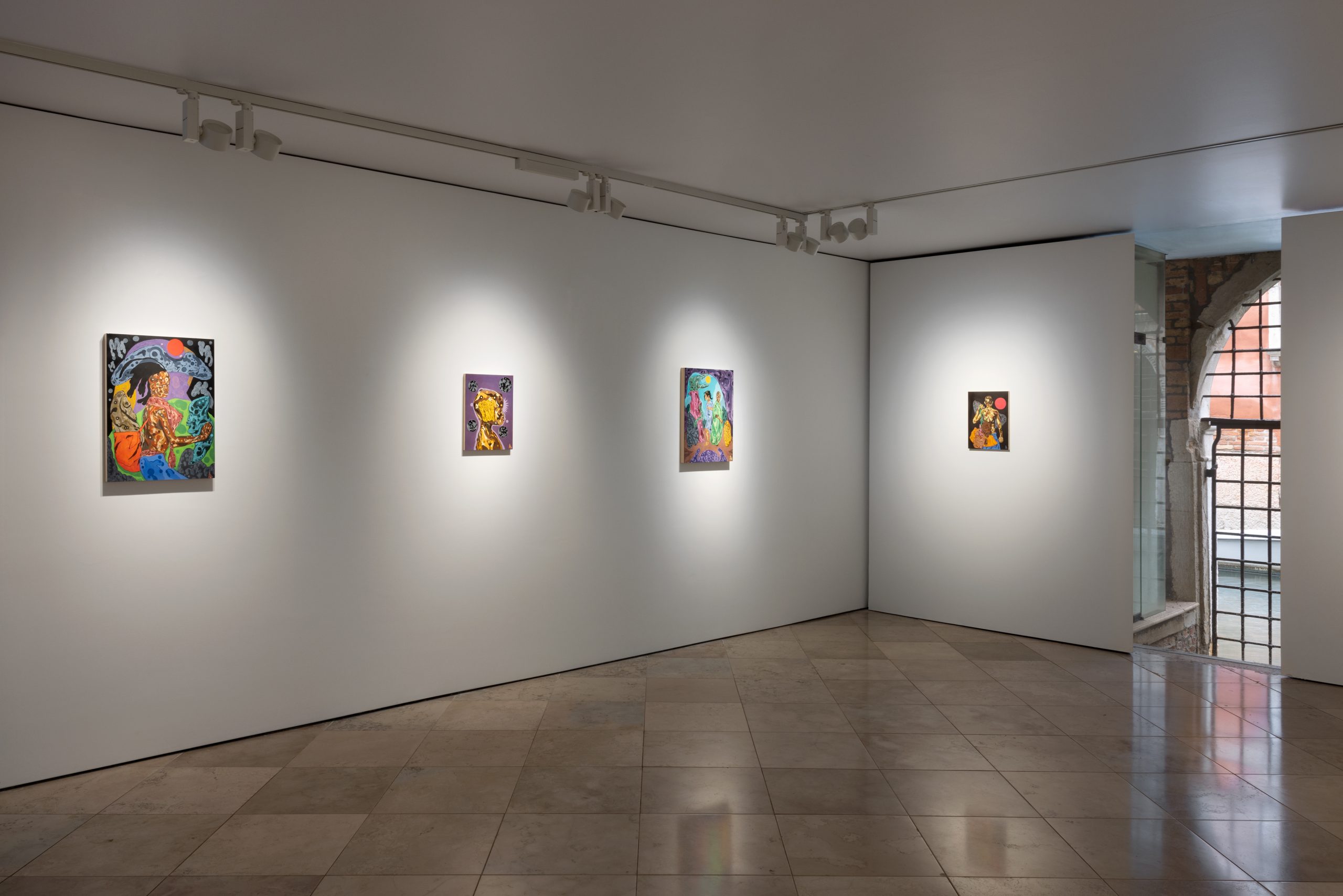
In his exhibition at Victoria Miro, running until 13 December, Richard Ayodeji Ikhide presents a new series of tempera paintings on wood influenced by Venetian atmospheres.
Drawing inspiration from ancient and indigenous forms of knowledge, as well as manga, Ikhide creates his own expressive world, emphasising imagination, syncretism, and personal mythologies. We met with the artist to discuss the themes explored in Crossroads of the Past.
The title of the exhibition, Crossroads of the Past, also reflects your life experience – you were born in Lagos, Nigeria, and now live in London – and your work as well, as it incorporates historical and artistic influences expressed in a contemporary style. What interests you about art history and classical artistic tradition? How important is the past in your artistic practice?
In terms of my relationship with art history and past artistic traditions I see these as a chart of the development of human culture through the ages, whether I’m looking into African sculpture or looking at the European canon of painting I try to take a wholistic viewpoint in the sense that each of these respective cultures have contributed to the development of human culture into what it is today. And due to globalization and things like the internet in our contemporary period these different visual cultures bleed into each other and influence one another. So, for me as an artist there is so much value within these different canons as I can learn from them and absorb information for these different histories and traditions.
You experimented with the technique of egg tempera on wood panel for the first time here, making the pigments yourself. This technique enables you to remain faithful to the graphic style that is typical of your work. The figures have precise, linear features, and are covered in luminous, uniform glazes and contrasting colours. How does this technique interact with your poetics?
The one thing that drew me to egg tempera as a medium, besides the features you described, was how meditative the process of making the paint to then painting is, how it enables me as the artist to be fully engaged in each part of the process of creating a piece of work, as I am interested in metaphysical ideas around how we pull from our subconscious an immaterial etheric space and bring this into the material solid space of the world we live in, in ways this process of painting almost becomes ritualistic or alchemical. So, egg tempera for me seemed appropriate for this sort of thinking which has been a core aspect of my practice.
The works on display are the result of your artistic residency in Venice. What struck you most about your time here?
Venice being a very historical city as inspiring the efforts to preserve aspects of venetian culture and heritage was what stuck out the most for me, and the museums were a great source of inspiration being able to see and access paintings which I had only seen in books previously.
The mythological aspect is very important to you. In fact, you have stated: “I see each person’s life as a myth of its own, an individual odyssey, and I’m interested in what it means to mythologise yourself through that journey”. You have also cited Carl Jung’s studies on heroes and, in particular, Joseph Campbell’s work on narratology. What interests you about myth, and how does it fit into the narratives portrayed in your works?
My interest in myth started from a young age mainly with how it sparked my imagination as a child but as I have gotten older and delved deeper into the functions of myths to human society I see more and more value in terms of how we as human being have used myths to make sense of our world, I love that myths bounce between the macrocosm of the universe and cosmos through stories of creation myth and down to the societal in terms of how we structure our communities and further down into the personal and individual level, there are a myriad of myths which relate to these various aspects of life as we know it.
So, for this body of work within the show I went into the personal and the family dynamic which has been part of my life in the past year as my fiancé and I welcomed our daughter into the world, so the relationships between family members which has been a reoccurring within my practice became even more powerful now starting a family of my own, so in doing research the holy family as a dynamic stood out to me while looking into icon paintings, and this was a theme I wanted to explore and create a group of character archetypes which represented these ideas.
In this series, you combine Italian Renaissance religious iconography — for example, the reference to Mary Magdalene in Matri, Carlo Crivelli’s Christ Blessing in Blessing, and St Jerome in Patri — with Nok sculptures, devotional objects from south-western Nigeria used as objects of ancestor worship and references to the Edo religion. How interested are you in symbolism, and how in the forms of these artistic traditions?
In my view, symbols and symbolism are a large part of how we perceive and interact with the world around us, these can be icons and logos for brands to larger symbols of the image of a mother and child which is something every human being can relate to, as we all come from our mother’s. I’m interested in how various cultures have communicated core ideas through these archetypal symbols and motifs, the figure of St. Jerome, Mary Magdalene etc. were archetype which I saw parallels within aspects of Nigerian culture. In the wilderness related to shaman and herbalists within Nigerian traditions, Mary as a matriarch related to matrilineal practices and family dynamics which I had been looking into around various African cultures and societies. So, during the process of developing these pieces for the show I was interested in melding these different symbolic representations into a new visual language.
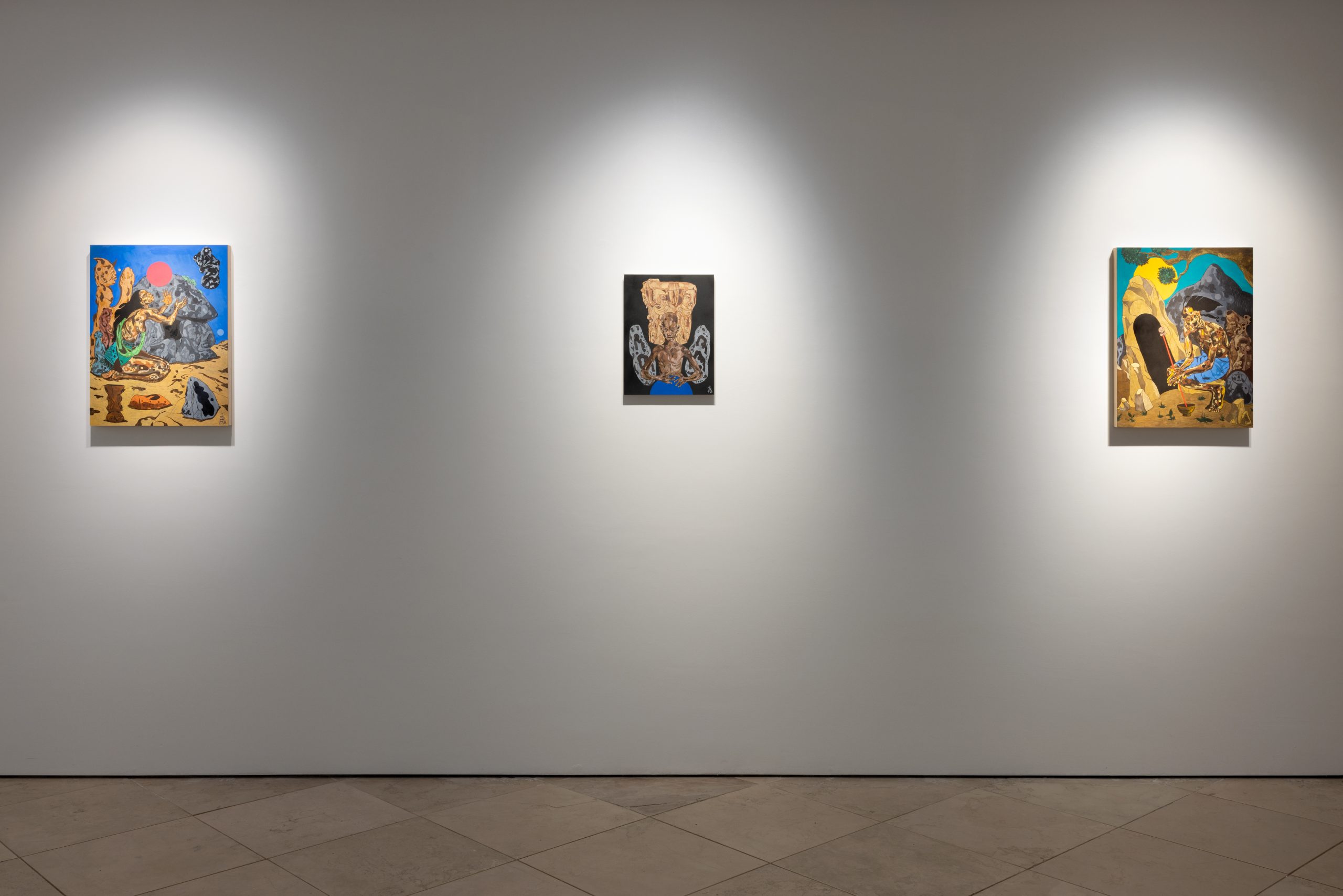
PHOTO CREDITS
Installation view, Richard Ayodeji Ikhide: Incroci del Passato (Crossroads of the Past) Victoria Miro Venice, © Richard Ayodeji Ikhide. Courtesy the artist and Victoria Miro
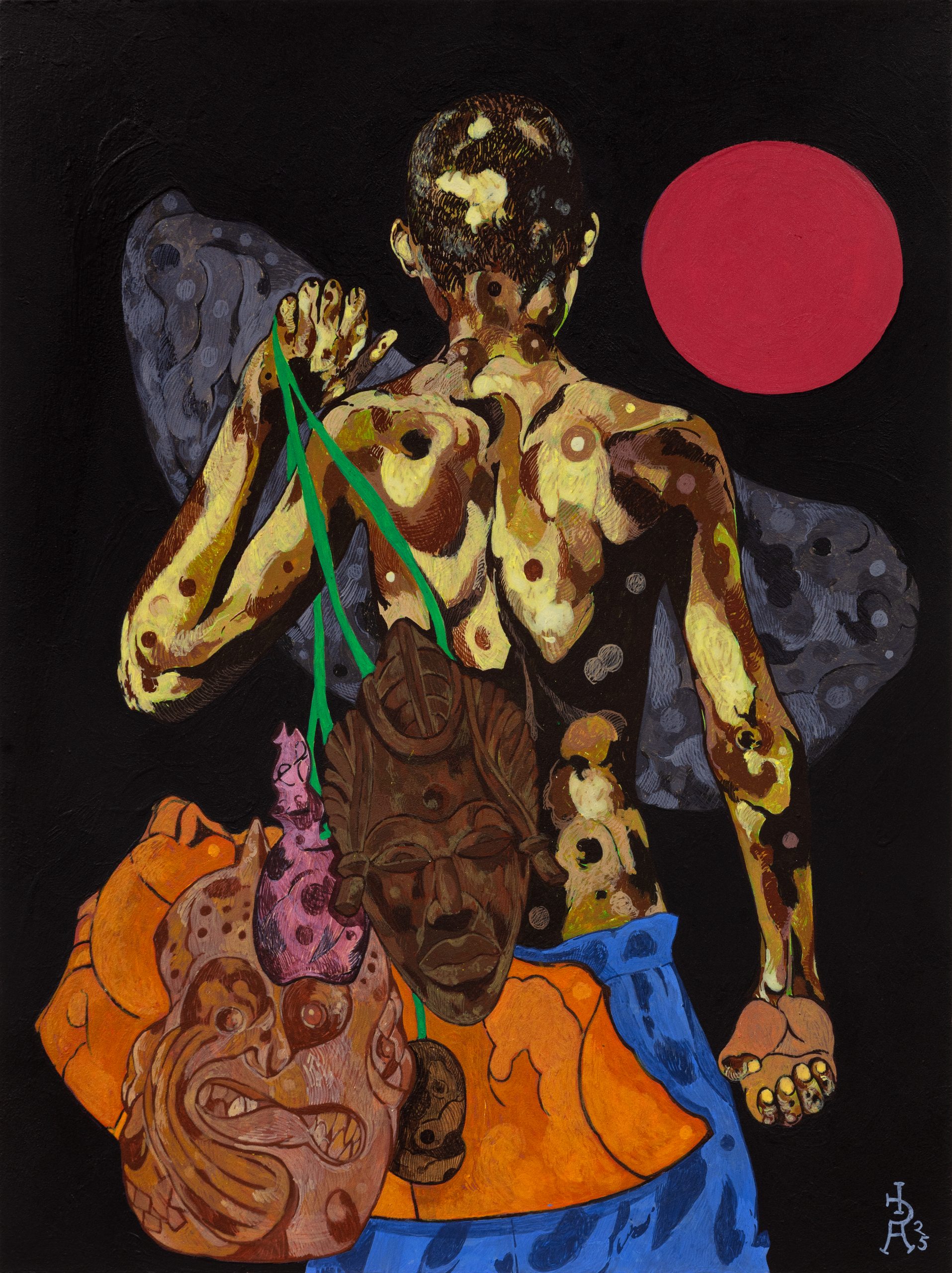
Richard Ayodeji Ikhide, Carry Forth, 2025, Tempera on panel © Richard Ayodeji Ikhide Courtesy the artist
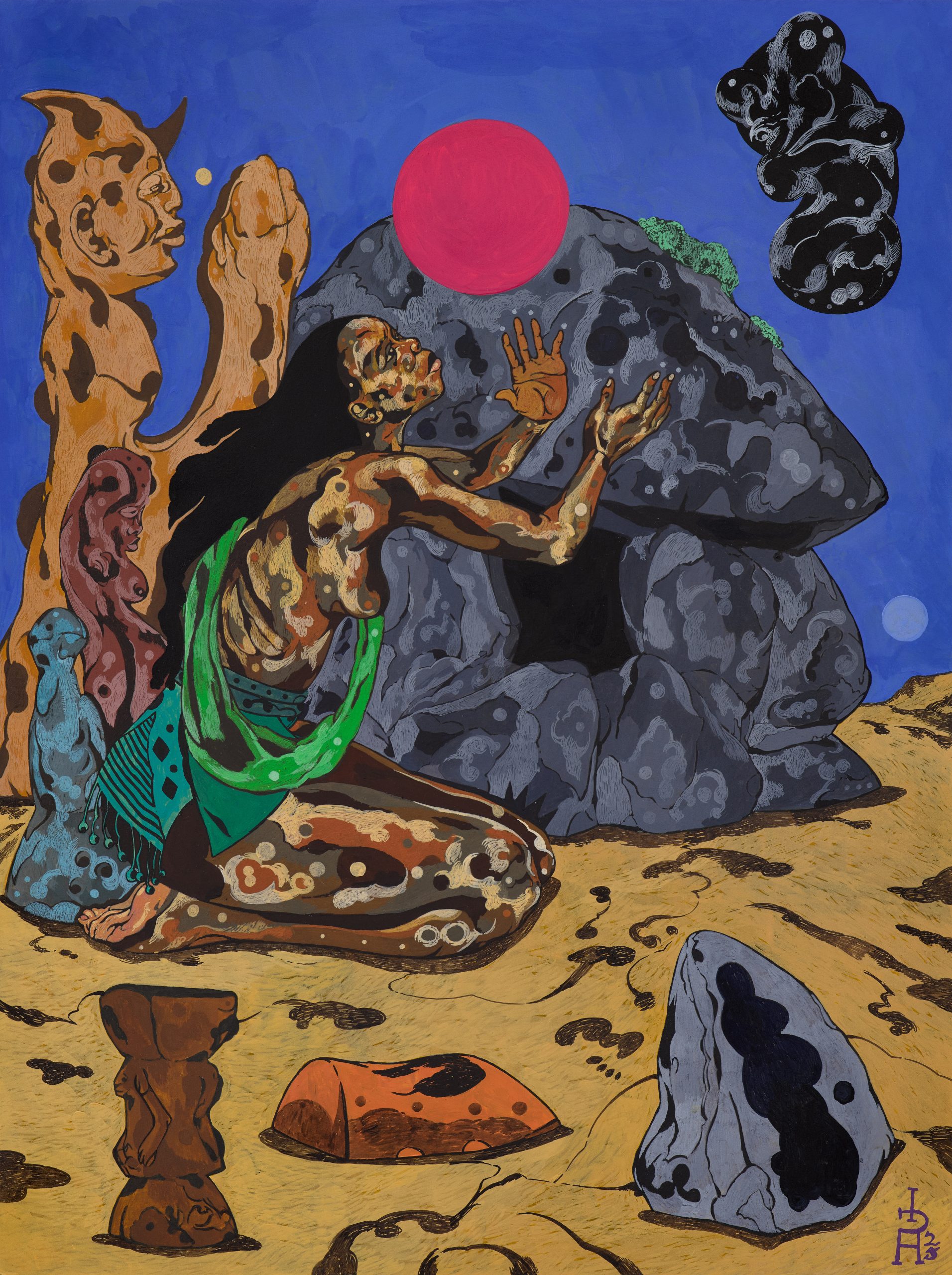
Richard Ayodeji Ikhide, Matri, 2025, Tempera on panel © Richard Ayodeji Ikhide Courtesy the artist
Richard Ayodeji Ikhide (1991, Lagos, Nigeria), lives and works in London, UK. He is a graduate of the Royal Drawing School. Ikhide’s work is the subject of a solo exhibition, Tales from Future Past, at CPM Gallery, Baltimore (27 September–15 November 2025). In 2022, he presented Acts of Creation with Victoria Miro Projects. Other notable solo presentations include Emiomo, Candice Madey, New York (2022); Immateria, Galerie Bernhard, Zurich (2022); MythMaking, Steve Turner, Los Angeles (2021); Future Past, V.O Curations, London (2021); and Osmosis, Zabludowicz Collection, London (2019).
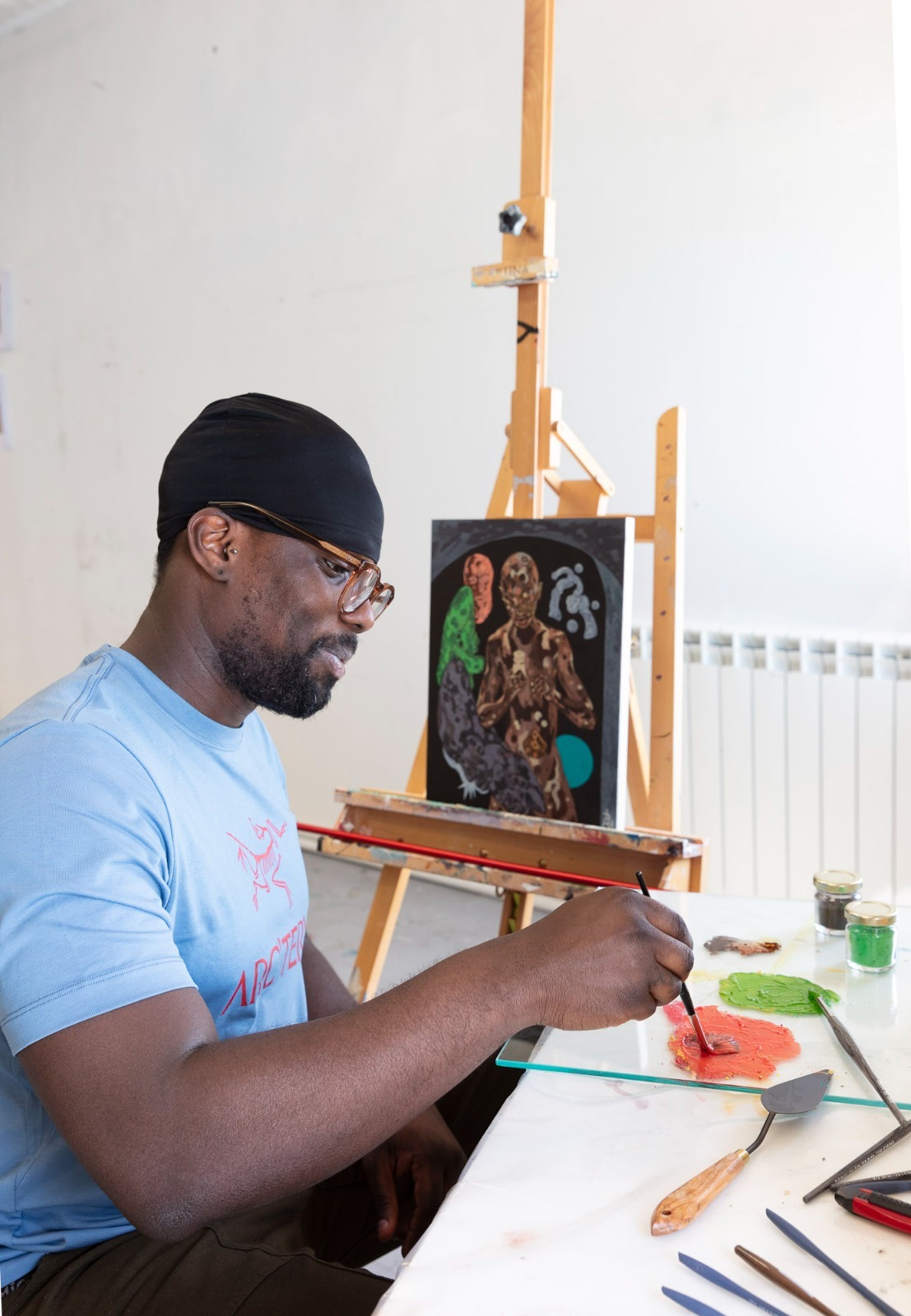
Portrait of Richard Ayodeji Ikhide, 2025 Photo by Andrea Rossetti
BIO
Richard Ayodeji Ikhide (1991, Lagos, Nigeria), lives and works in London, UK. He is a graduate of the Royal Drawing School. Ikhide’s work is the subject of a solo exhibition, Tales from Future Past, at CPM Gallery, Baltimore (27 September–15 November 2025). In 2022, he presented Acts of Creation with Victoria Miro Projects. Other notable solo presentations include Emiomo, Candice Madey, New York (2022); Immateria, Galerie Bernhard, Zurich (2022); MythMaking, Steve Turner, Los Angeles (2021); Future Past, V.O Curations, London (2021); and Osmosis, Zabludowicz Collection, London (2019).
In addition, his work has been included in several group exhibitions including Prospect and Refuge, Sim Smith, London (2022); ASSEMBLE, V.O Curations, London (2021); No horizon, no edge to liquid, Zabludowicz Collection, London (2020); For the Many, Not the Few, Guts Gallery, Online; Bloomberg New Contemporaries, South London Gallery, London (2018); and Best of The Drawing Year 2018, Christie’s, London (2017).
His work has been acquired by the Royal Collection Trust.
Portrait of Richard Ayodeji Ikhide, 2025 Photo by Andrea Rossetti


- Fondazione Imago Mundi ETS
- Piazza del Duomo, 20
- 31100 Treviso, Italy
- Tax Code 94161540268
- info@fondazioneimagomundi.org
- +39 0422 512200
- © 2026 Fondazione Imago Mundi ETS
- Legal Terms / Privacy & Cookie Policy / Credit
- Follow us:
-


-



- Fondazione Imago Mundi ETS
- Piazza del Duomo, 20
- 31100 Treviso, Italy
- Tax Code 94161540268
- info@fondazioneimagomundi.org
- +39 0422 512200
- © 2026 Fondazione Imago Mundi ETS
- Legal Terms / Privacy & Cookie Policy / Credit
- Follow us:
-
-
- Fondazione Imago Mundi ETS
- Piazza del Duomo, 20
- 31100 Treviso, Italy
- Tax Code 94161540268
Follow us:


