





Andres Serrano
October 2026
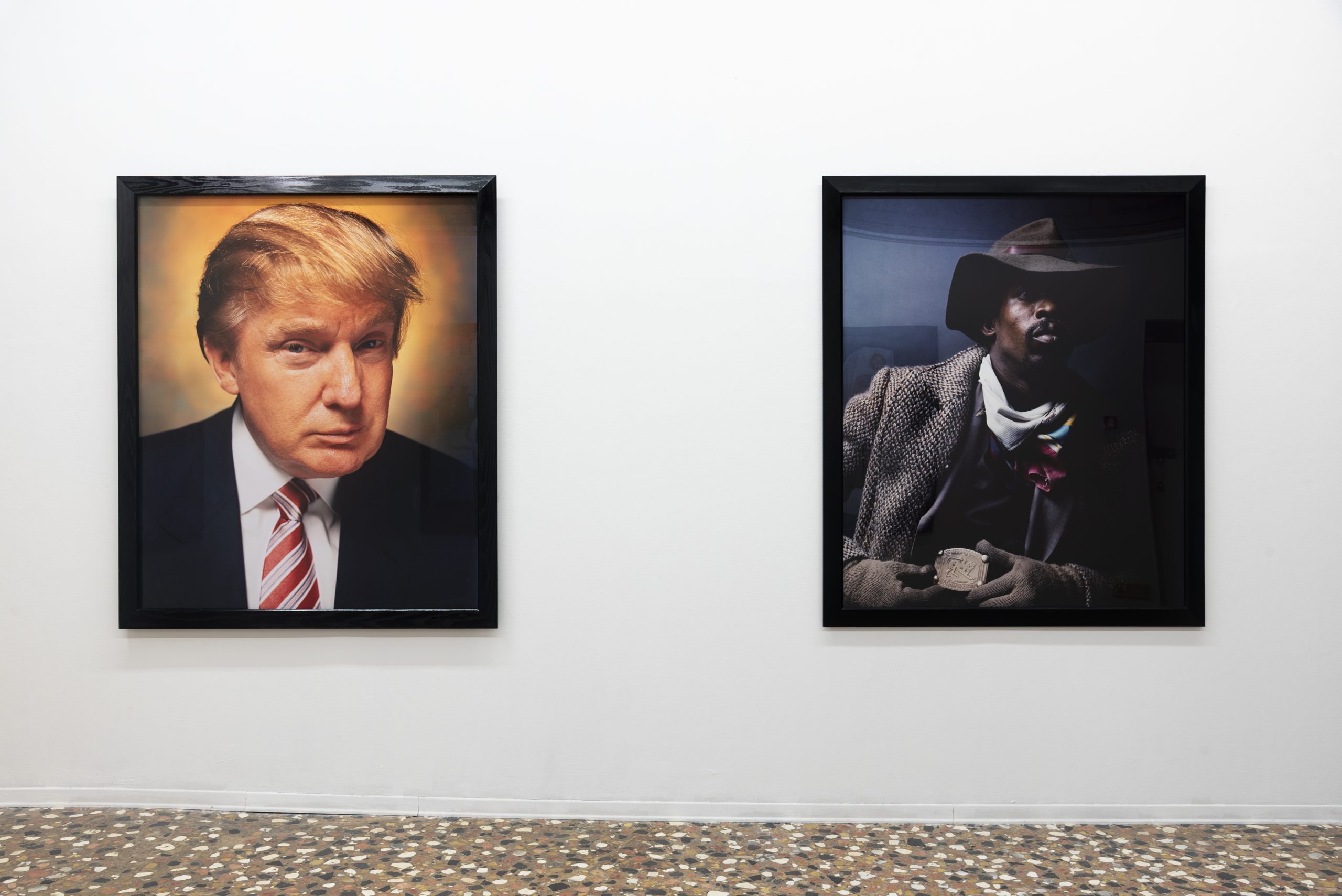
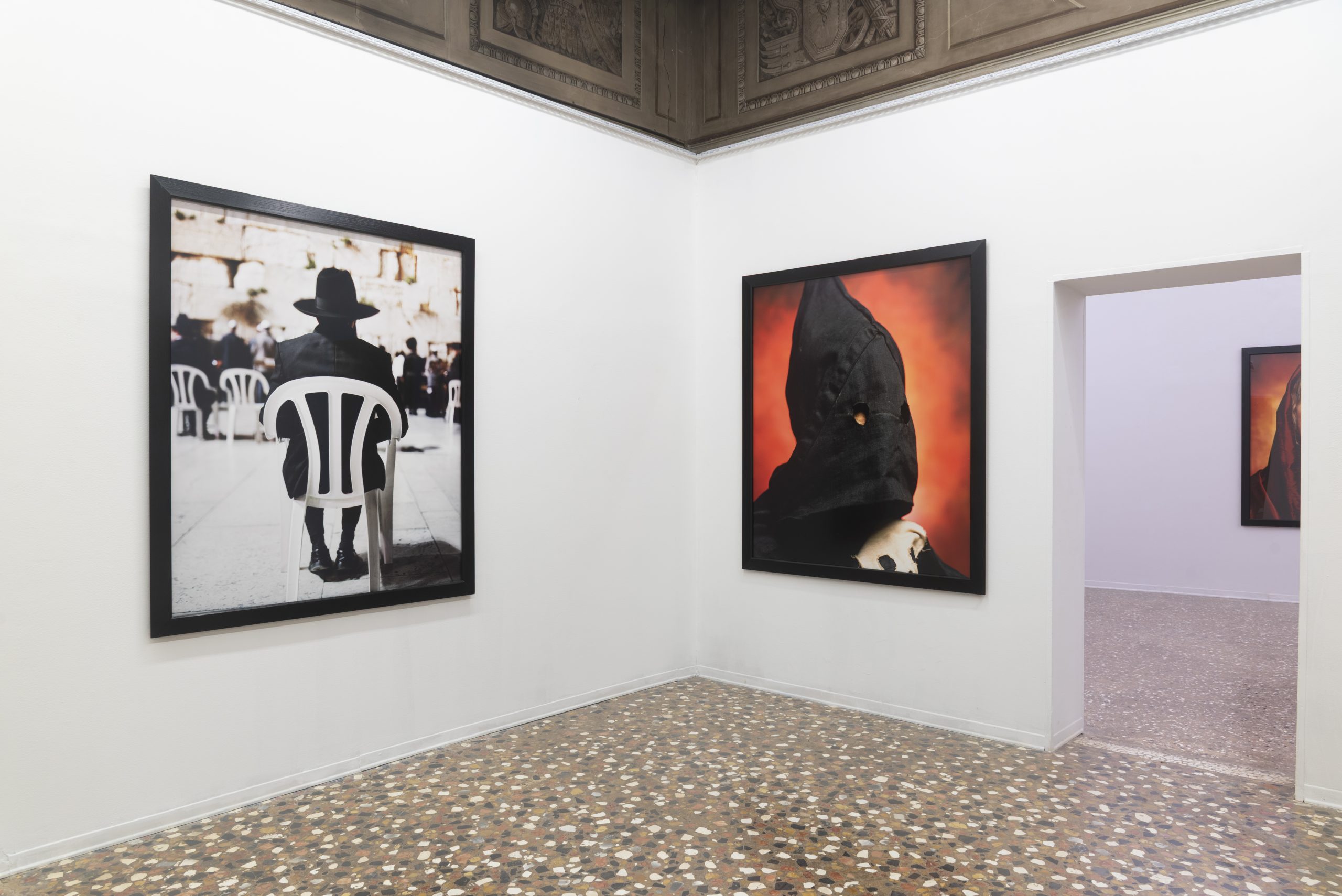
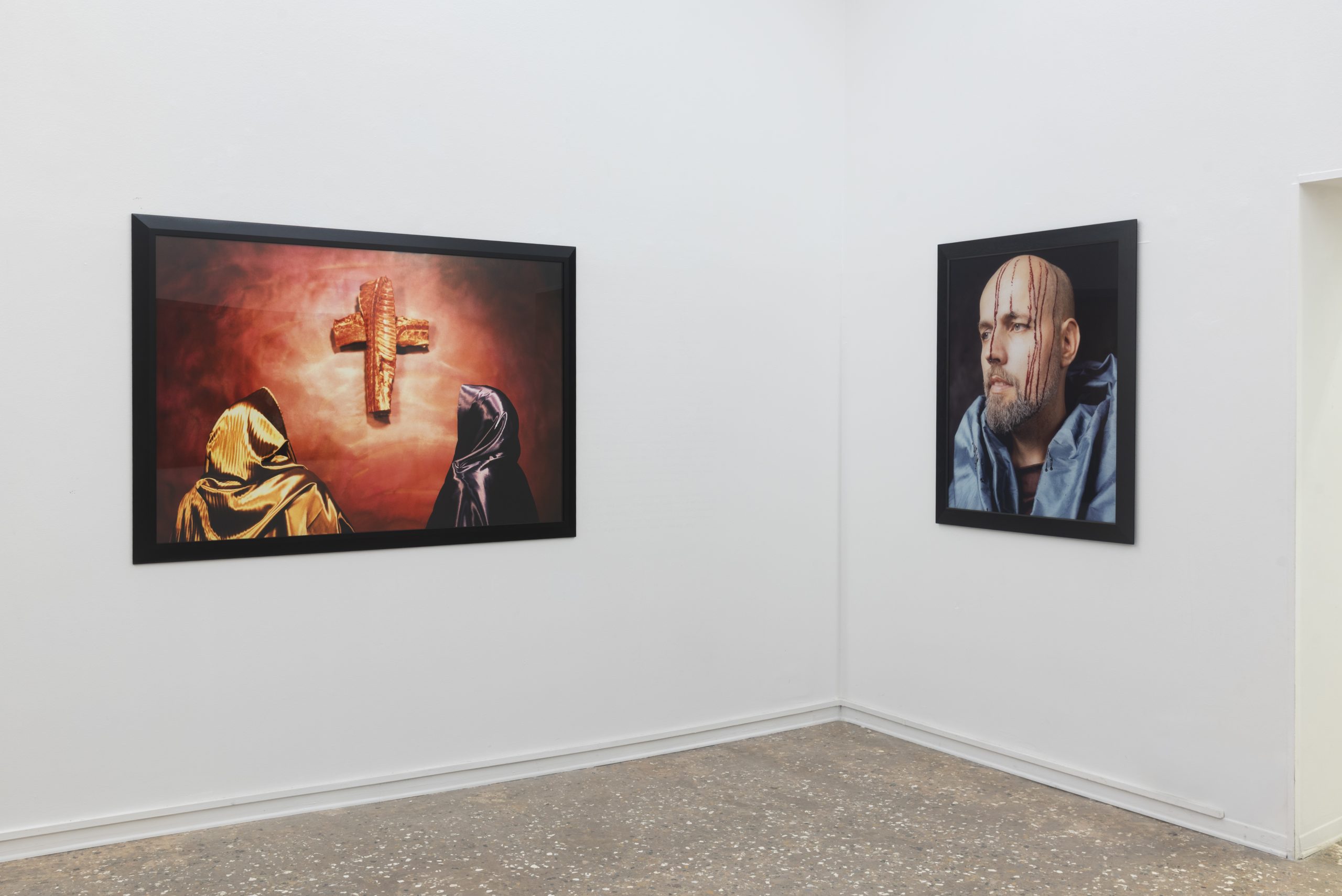
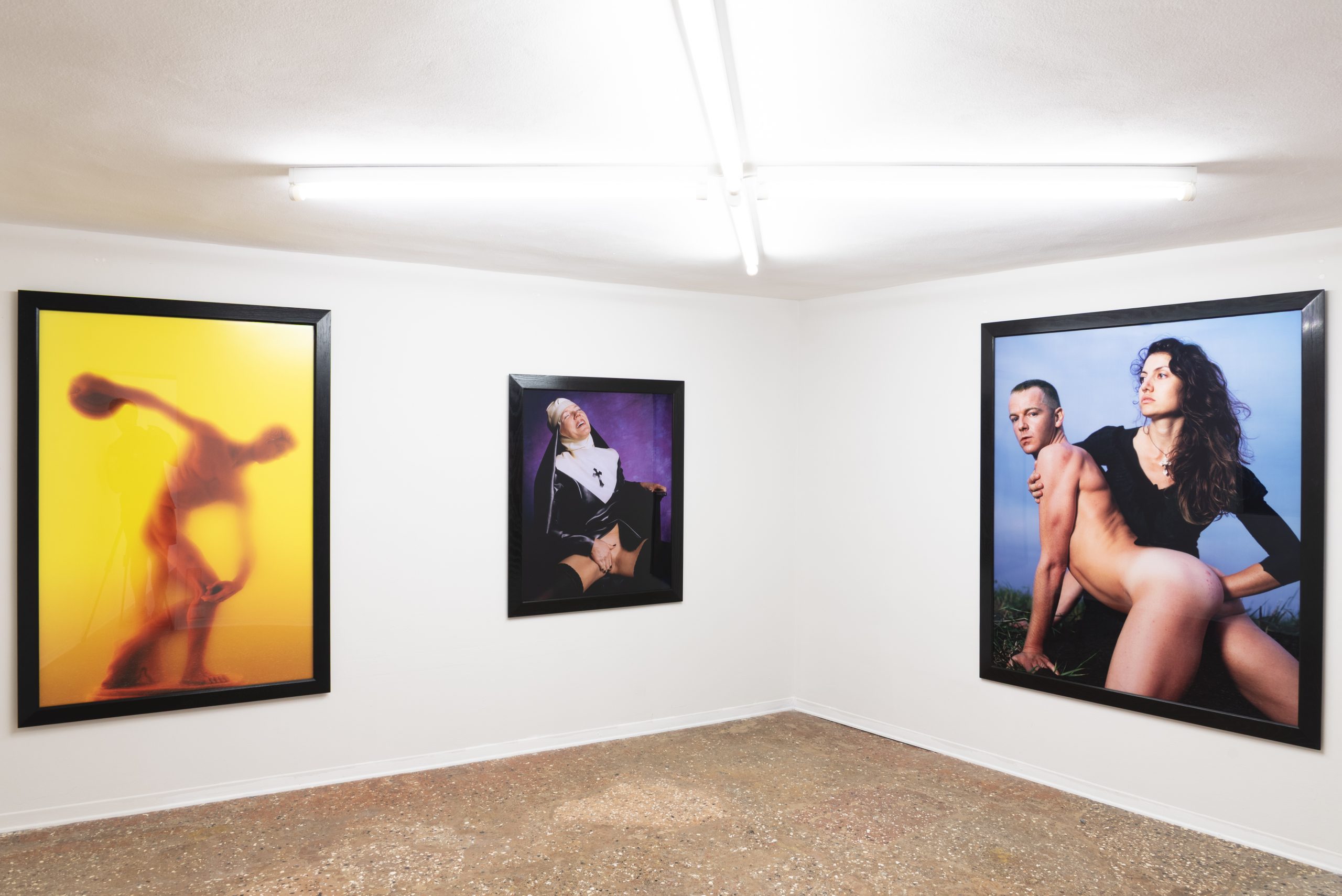
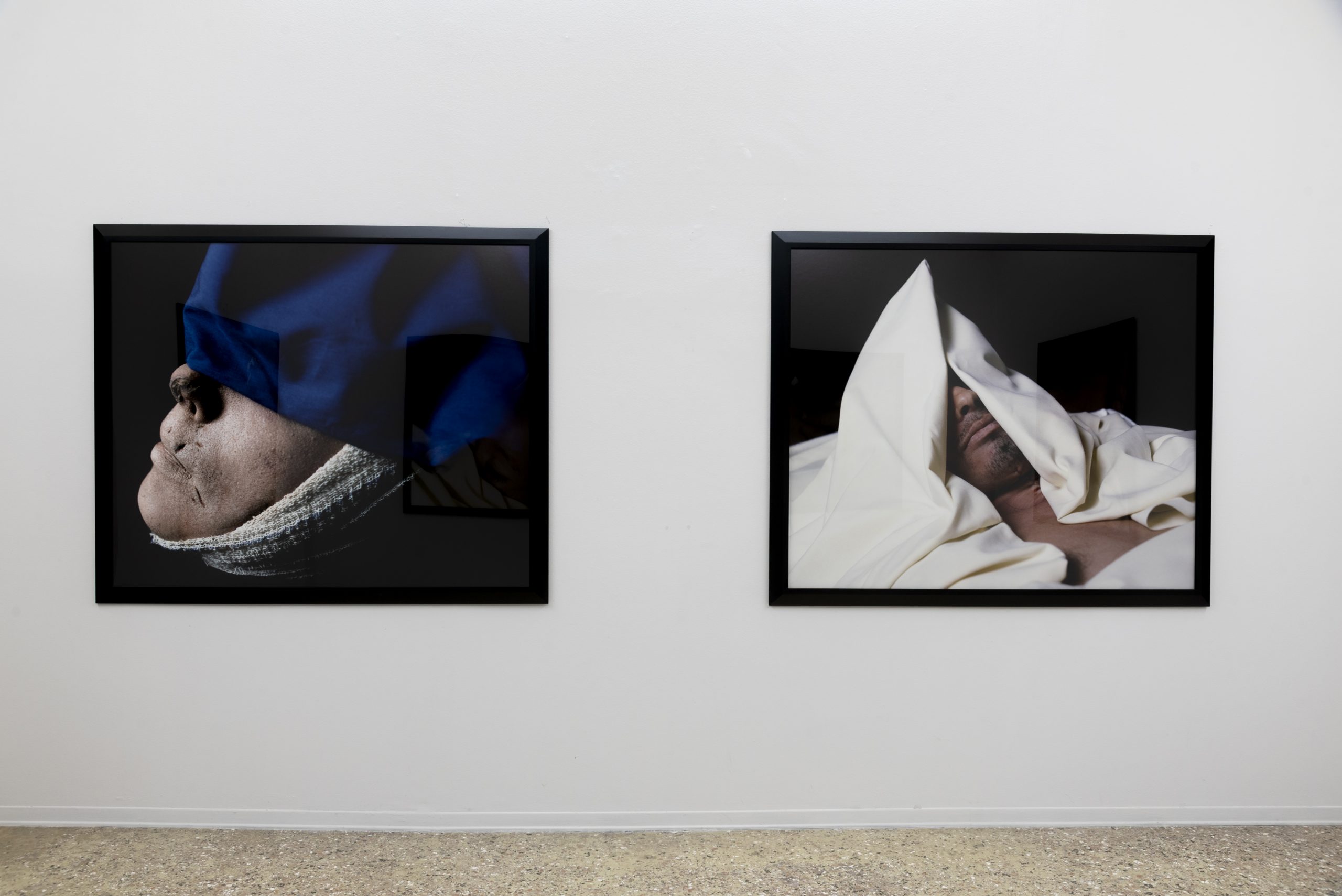
Sacro e profano 1983–2019 — curated by Valerio Dehò and running until November 14 at the Galleria Michela Rizzo in Venice — presents a selection of works from various photographic series developed by the artist over the past thirty-five years. Famous for the scandal sparked by his 1987 work “Piss Christ”, Serrano has continued to produce controversial photographic series addressing topical themes, exploring religious or ideological affiliation, political constructs, sexuality, and the presence of the body. We spoke with him about his work and the key themes featured in his Venice exhibition.
In your work, you address themes that sooner or later we all have to confront: life and death, sex, religion, skin color. You have spoken about seeking a kind of fresh or unprejudiced gaze in your relationship with the subjects you portray, as if you were seeing them for the first time. Is there a particular subject or series that, more than any other, has changed the way you see?
I can’t say that any one subject has changed the way I see, but in all, they’ve allowed me to see my subjects up close. The revelation has been that in turning them from ideas and themes in my head into pictures, they’ve surprised me by how good they look. Take The Morgue series, or the Ku Klux Klan series, for instance. If you think about them in the abstract, everyone will see a different picture in their mind. My pictures are an attempt to reduce them to their essence so that we can all see the same picture. That doesn’t mean we’re all going to see the same thing and that’s the power of art, that its subject can be interpreted any way one chooses. It’s not unlike an experience that may have a commonality about it yet feels differently to each individual. Not everything will earn an absolute consensus of approval, the best you can hope for is to find the audience it speaks to. To that end, the artist in me wants to seduce and indulge my audience by giving them what they want with some unexpected twists and turns.
There seems to be a particular ambiguity in the way your photographs look at their subjects: you do not necessarily suggest how we should look at what you show us, leaving the viewer in a sometimes uncomfortable position, somewhere between the voyeur and the witness. I’m thinking, for instance, of the Ku Klux Klan series and a comment made by a friend of yours when he saw it first in 1993: “These look so noble, they almost look like recruitment posters for the Klan.” What role does beauty play for you when you photograph such difficult subjects or situations? And what happens, in the passage from person to character, when photography comes into play?
I think the audience sometimes likes being put in that uncomfortable position. I provide it for them. I’m the artist, but I’m also the audience, and when I show you something, it’s because I wanted to see it for myself. I think that’s why artists create, to give themselves the pleasure of seeing something they want to see for themselves. It’s an act of narcissism that cannot be denied. Why would you want to create something if you didn’t want to enjoy it yourself? Everyone finds pleasure and beauty in their work. I’m old fashioned, I like things that look good, that’s my definition of beauty. If it looks goods to me that’s all the beauty I need. I have trouble appreciating art that doesn’t have some beauty in its aesthetic. I can’t appreciate things that I’m told I’m supposed to like or appreciate if they don’t seduce me. That’s why I don’t judge my subjects and don’t make them look bad. On the contrary, I elevate them to a higher aesthetic because that’s where I find my art and my purpose. More than once someone that I photographed went to an exhibition of mine and when they saw their picture said, “Wow, I didn’t think it would be so big and beautiful.”
You were raised in a Catholic family, and you have said that you are a believer but not a practicing Catholic. You also met Pope Francis a few years ago. What is your relationship with faith today? And to what extent do you think your personal background influences your work?
I’m a practicing Christian although such a declaration opens itself to wide range of interpretations. Without getting heavy handed about it, I believe in Christ and that’s the extent of of it. I believe that at the pearly Gates of Heaven, the attendant asks everyone at the door, “Are you a Christian or not?” And if you say you’re a Christian it’s enough to get you in. People complicate things when things are much simpler than they appear to be. My Catholic background has certainly influenced my work. Christ and Christianity has been a running theme in my work. It’s not the only one but it’s always there in the background.
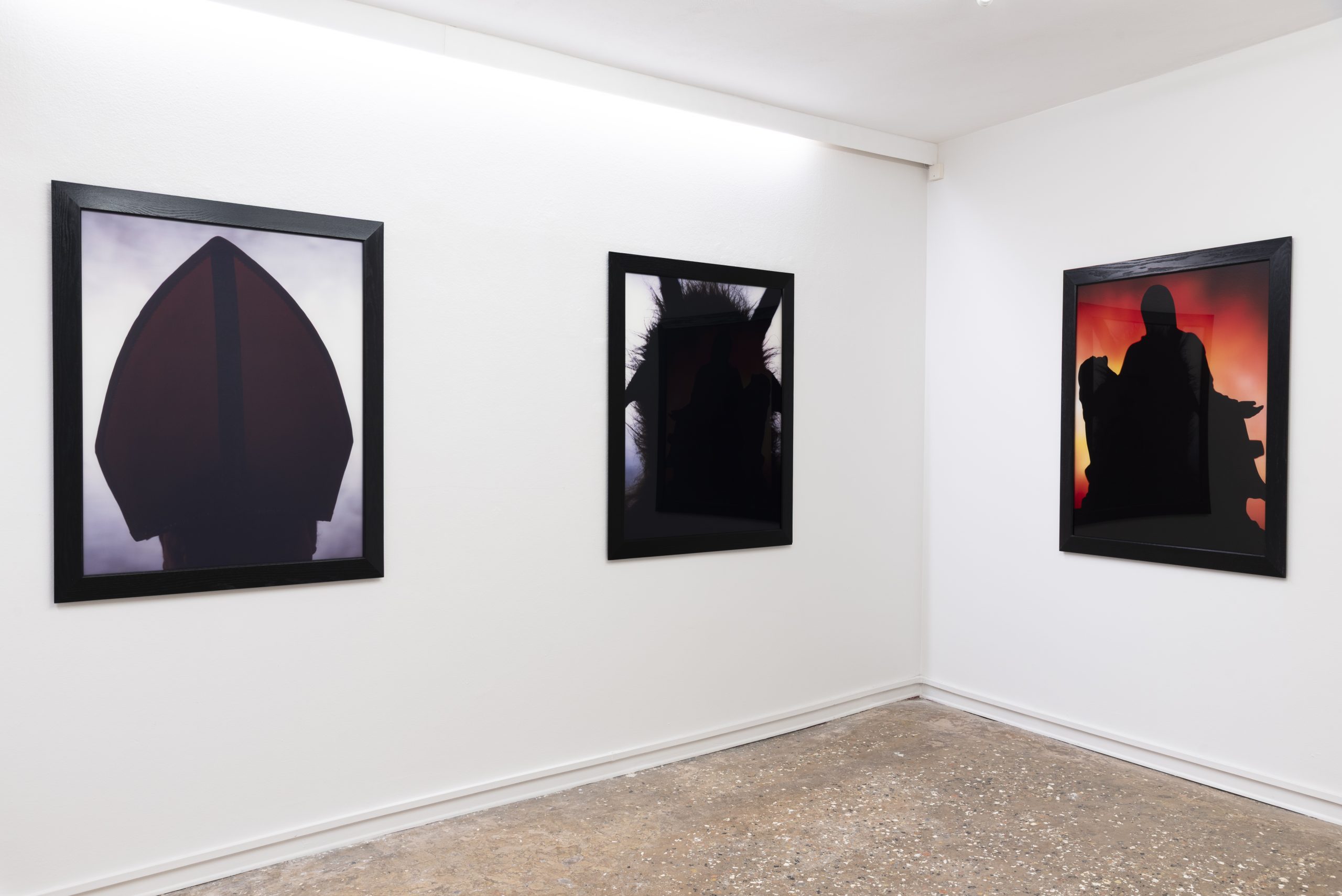
Germano Celant wrote that your work “aspires, like a shadow, to position itself alongside,” evoking a hidden presence, something that has yet to be revealed. Opposites seem to coexist throughout your work: shadow and light, life and death, the sacred and the profane, what is exposed and what remains hidden. Even what is socially repellent is often rendered through a strong aesthetic dimension. Are you interested in exploring precisely this space in between—between what we see and what remains invisible, between what is brought to light and what we tend to repress, between abjection and sublimation?
Germano Celant was a great thinker, he understood the darkness behind the light and behind creativity. As sure as day and night, life has its opposite attraction, its yin and yang, up and down. For Jung, the Shadow plays an important part in our lives. It’s the other side, the side that does not judge and comes most alive in our sleep. Artists are often in cahoots with their Shadow whether they know it or not. Sometimes, before going to sleep I tell my Shadow, I need this in the morning, and when I awake, it’s on the table. The Shadow doesn’t judge, it delivers. I don’t believe in repressing anything, neither abjection nor sublimation. It’s the stuff that art is made of.
You have said that you looked forward to the day when one of your photographs manages to disturb you as well. Is that still something you are looking for? And what would an image have to possess to achieve that?
That’s a good question. I’m still looking for the answer. But I think once I find it, it’ll be a doozy.
PHOTO CREDITS
Exhibition views, Sacro e profano 1983 – 2019, 2026, Galleria Michela Rizzo, Venezia, ph. credit Francesco Piva
Andres Serrano (1950, New York, USA), lives and works in New York. After graduating in 1969 from the Brooklyn Museum Art School in New York (United States), Andres Serrano became one of the most internationally acclaimed contemporary artists. Among his most important solo exhibitions are: En Las Fronteras at Villa Croce Museum of Contemporary Art in Genoa (Italy, 2006), A History of Sex at Kulturen in Lund (Sweden, 2007), Redemption at the Fotografiska Museum in Stockholm (Sweden, 2015), Torture at Collection Lambert in Avignon (France, 2016), Uncensored Photographs at the Royal Museums of Fine Arts of Belgium in Brussels (Belgium, 2016), Maison Européenne de la Photographie in Paris (France, 2016), Andres Serrano - Revealing Reality at Huis Marseille in Amsterdam (The Netherlands, 2017), The Game - All Things Trump at ArtX in New York (United States, 2019), Infamous at NeueHouse, Los Angeles, and Fotografiska New York (USA, 2020), Torture by Andres Serrano - A/political Project at the Municipal Theatre of Piraeus, Athens (Greece, 2021), and Infamous at Fotografiska Stockholm (Sweden, 2022).
BIO
Andres Serrano (1950, New York, USA), lives and works in New York. After graduating in 1969 from the Brooklyn Museum Art School in New York (United States), Andres Serrano became one of the most internationally acclaimed contemporary artists. Among his most important solo exhibitions are: En Las Fronteras at Villa Croce Museum of Contemporary Art in Genoa (Italy, 2006), A History of Sex at Kulturen in Lund (Sweden, 2007), Redemption at the Fotografiska Museum in Stockholm (Sweden, 2015), Torture at Collection Lambert in Avignon (France, 2016), Uncensored Photographs at the Royal Museums of Fine Arts of Belgium in Brussels (Belgium, 2016), Maison Européenne de la Photographie in Paris (France, 2016), Andres Serrano - Revealing Reality at Huis Marseille in Amsterdam (The Netherlands, 2017), The Game - All Things Trump at ArtX in New York (United States, 2019), Infamous at NeueHouse, Los Angeles, and Fotografiska New York (USA, 2020), Torture by Andres Serrano - A/political Project at the Municipal Theatre of Piraeus, Athens (Greece, 2021), and Infamous at Fotografiska Stockholm (Sweden, 2022).
Andres Serrano’s works are held in numerous private and public collections such as the Museum of Modern Art in New York (United States), the Maison Européenne de la Photographie in Paris (France), Huis Marseille (The Netherlands), the National Gallery of Australia in Canberra (Australia), the Vancouver Art Gallery (Canada), the Museum of Contemporary Art Zagreb (Croatia), the ARKEN Museum of Modern Art in Copenhagen (Denmark), the CAPC Musée d’art contemporain in Bordeaux (France), Collection Lambert in Avignon (France), the Whitney Museum of American Art in New York (United States), the New Museum of Contemporary Art in New York (United States).


- Fondazione Imago Mundi ETS
- Piazza del Duomo, 20
- 31100 Treviso, Italy
- Tax Code 94161540268
- info@fondazioneimagomundi.org
- +39 0422 512200
- © 2026 Fondazione Imago Mundi ETS
- Legal Terms / Privacy & Cookie Policy / Credit
- Follow us:
-


-



- Fondazione Imago Mundi ETS
- Piazza del Duomo, 20
- 31100 Treviso, Italy
- Tax Code 94161540268
- info@fondazioneimagomundi.org
- +39 0422 512200
- © 2026 Fondazione Imago Mundi ETS
- Legal Terms / Privacy & Cookie Policy / Credit
- Follow us:
-
-
- Fondazione Imago Mundi ETS
- Piazza del Duomo, 20
- 31100 Treviso, Italy
- Tax Code 94161540268
Follow us:


